
Building a blog from zero to 16,800+ monthly clicks, scaling to 6,400+ top-10 keywords, and creating the site’s #1 page for a WordPress company serving 250,000+ customers.
Project Overview
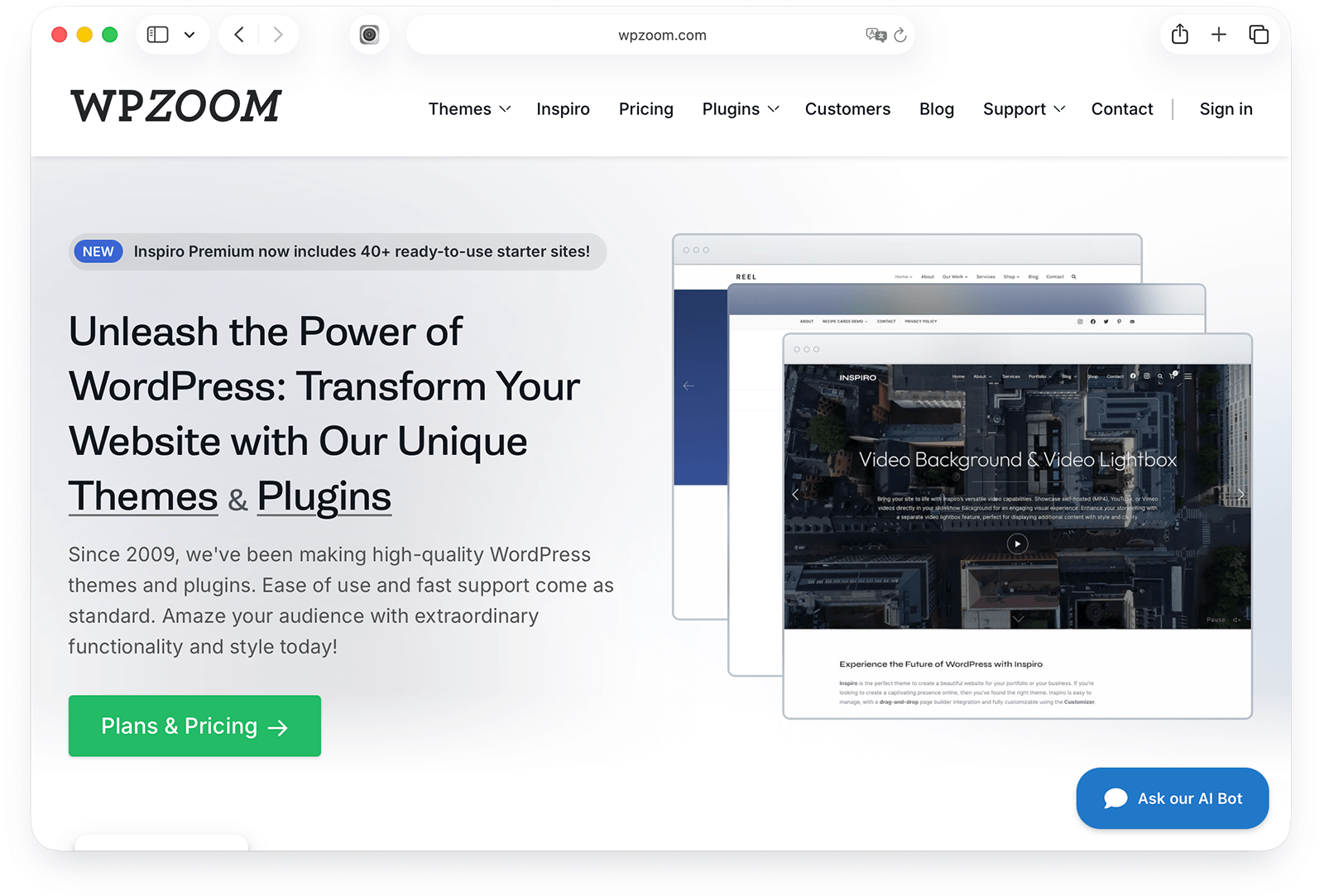
WPZOOM is a leading developer of premium WordPress themes and plugins, established in 2008. The company serves over 250,000 customers worldwide, including Bloomberg, MIT, and Groupon, with flagship products like the Inspiro theme for video portfolios and the Foodica theme for food bloggers.
- Industry: WordPress Themes & Plugins
- Engagement Period: July 2023 – March 2026
- Goal: Build a scalable organic traffic channel, reduce reliance on brand-only search traffic, and increase visibility for competitive WordPress-related keywords
- My Role: Lead digital marketing strategist responsible for SEO, content strategy, email marketing, PPC, social media, and conversion optimization
Situation & Challenge
When I joined WPZOOM in mid-2023, the company had a strong product reputation built over 15 years, but its organic search presence didn’t reflect that.
🚩 Blog at zero: The blog section had just 11 dormant pages generating virtually no organic traffic: 0 clicks per month. Content that did exist was scattered across four disconnected sections (/tutorials/, /news/, /wp-themes/, /full-site-editing/) with no unified content strategy or SEO framework.
🚩 Brand-dependent traffic: Most of the site’s 11,400 monthly clicks came from brand-related queries, product pages, and documentation. There was no content engine driving discovery from new audiences.
🚩 Competitive landscape: WordPress is one of the most content-saturated niches online. Every theme company, hosting provider, and WordPress blog competes for the same educational and tutorial keywords. Standing out requires both volume and quality.
The challenge: build a content strategy from scratch that could compete in a crowded niche, while simultaneously restructuring the existing content for better performance.
Strategy & Execution
I developed a seven-part strategy covering content architecture, content creation at scale, ongoing optimization, strategic link building, product-led SEO, technical SEO, and broader digital marketing.
1. Content Architecture Restructuring
The first priority was consolidating the site’s scattered content into a unified, SEO-friendly structure.
- Migrated 39 existing articles from four separate sections (/tutorials/, /news/, /wp-themes/, /full-site-editing/) into a single /blog/ directory with proper 301 redirects, updated internal linking, and optimized URL slugs.
- Redesigned the URL structure to be cleaner, more keyword-focused, and consistent. For example, /news/common-wordpress-theme-issues-and-how-to-fix-them/ became /blog/wordpress-theme-issues/.
- Rebuilt the internal linking architecture to support the new centralized blog, connecting articles to relevant product pages, documentation, and related content.
2. Content Creation at Scale
With the structure in place, I launched a systematic content creation strategy targeting high-value WordPress keywords across multiple intent categories.
Created 120+ new blog articles targeting strategic keyword clusters, executed in deliberate content sprints:
- Security cluster: 9 articles published in a single month covering WordPress security from every angle: malware scanning, DDoS protection, two-factor authentication, spam prevention, hacker protection, and login security.
- Theme education series: articles covering everything from “what is a WordPress theme” to child themes, block themes, customization, installation, and deletion, establishing WPZOOM as the authority on the topic closest to its core product.
- “How to start a __ blog” series: niche-specific blogging guides (food, travel, fashion, photography, lifestyle, book, tech, fitness, mom, sports, health, Christian, beauty) targeting high-volume aspirational search queries.
- Industry-specific theme roundups: niche theme articles (church, real estate, hotel, restaurant, spa, car rental, digital marketing, architecture, jewelry, medical, writers, events) published in rapid succession to capture commercial-intent long-tail traffic.
- Troubleshooting content: A cluster of fix-it guides targeting high-intent error queries (critical errors, database connection errors, JSON errors, maintenance mode errors) that WordPress users actively search for when they need help.
Targeted a balanced mix of search intents:
- Informational: “WordPress statistics,” “what is the WordPress default theme,” “how to create a WordPress theme”
- Troubleshooting: “how to fix WordPress critical error,” “the link you followed has expired,” “can’t access wp-admin”
- Commercial/comparison: “best recipe blogs,” “best SEO-friendly WordPress themes,” “best portfolio WordPress themes”
- Tutorial/how-to: “how to log in to WordPress,” “how to disable comments in WordPress,” “how to embed Instagram feed in WordPress”
3. Continuous Content Optimization
Publishing was only half the strategy. I implemented an active content update program to keep articles competitive and ranking well over time.
Updated 76 articles at least once after initial publication, nearly half of the entire content library, with refreshed information, improved targeting, and enhanced on-page optimization.
Updated 27 articles a second time, demonstrating an ongoing commitment to content freshness. High-performing articles like “How to Start a WordPress Blog,” “Best SEO-Friendly WordPress Themes,” and “How to Create a WordPress Theme” each received two rounds of optimization to maintain and improve their rankings.
Treated content as a living asset, not a one-time deliverable. Each update cycle included re-evaluating keyword targeting, refreshing outdated information, improving content depth, and optimizing meta data based on GSC performance data.
4. Strategic Link Building: The Statistics Asset
To strengthen the entire domain’s authority, I created a comprehensive WordPress statistics resource specifically designed as a linkable asset: the kind of data-rich page that journalists, bloggers, and marketers naturally cite when writing about WordPress.
Designed and published a WordPress statistics article packed with regularly updated market share data, usage statistics, and industry benchmarks that became a go-to reference across the web.
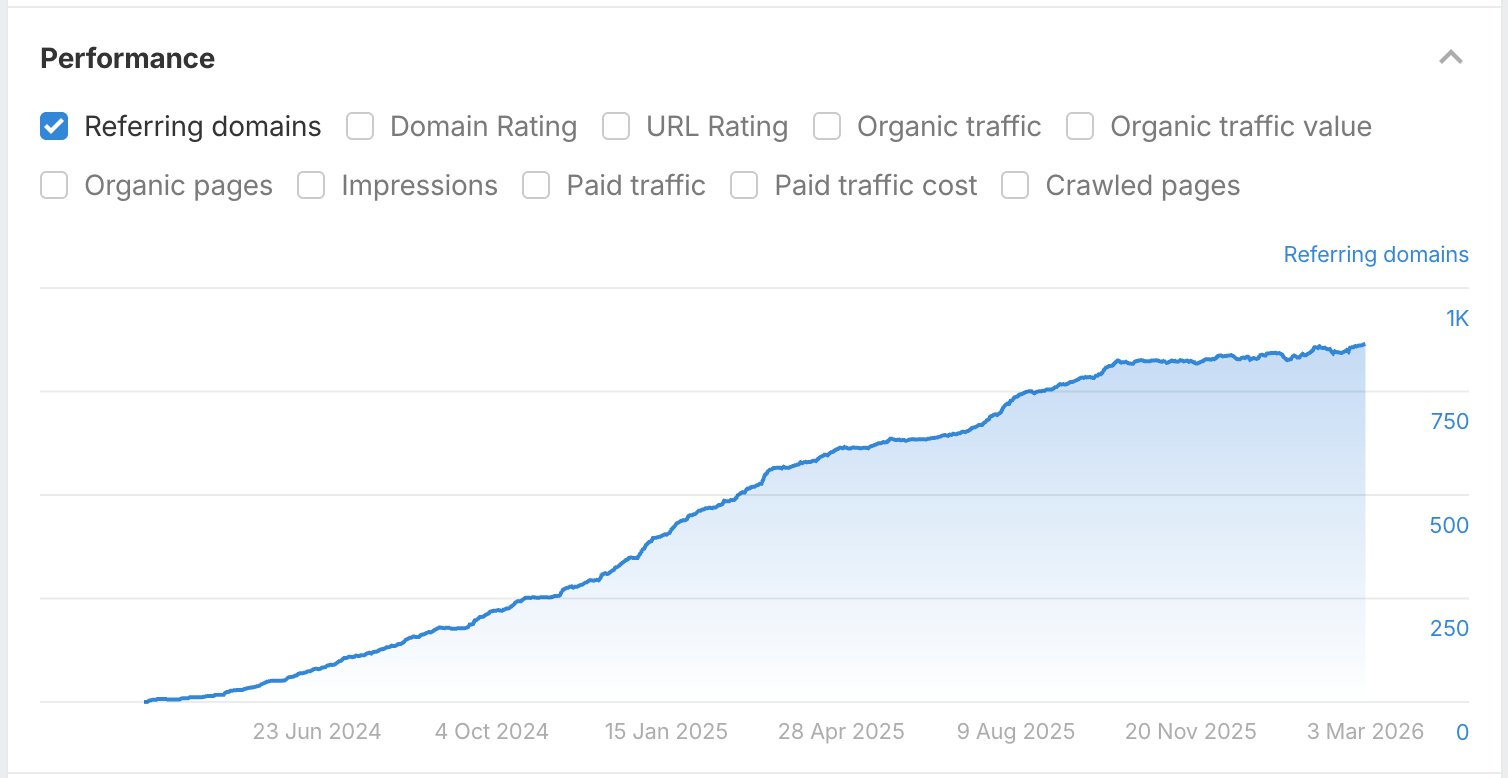
Grew the article from 0 to 860+ referring domains in under two years, attracting backlinks organically without outreach, purely through the quality and usefulness of the data.
Attracted links from some of the most authoritative domains on the internet, including Shopify (DR 96), Wix (DR 95), Medium (DR 94), HubSpot (DR 93), Substack (DR 93), GoDaddy (DR 93), Neil Patel (DR 91), PCMag (DR 91), Entrepreneur (DR 91), Gizmodo (DR 90), and Clutch (DR 91).
80% of referring domains provide dofollow links (688 of 863), meaning the vast majority pass link equity directly to WPZOOM, strengthening the authority of the entire domain, not just the article itself.
Built an internationally recognized resource, with backlinks from pages in 15+ languages including English, French, German, Spanish, Japanese, Russian, Polish, and more.
5. Product-Led SEO: Theme Detector & Starter Sites Cluster
Beyond content marketing, I identified opportunities to create product-led assets that would attract organic traffic while directly showcasing WPZOOM’s products.
WordPress Theme Detector
- Launched the WordPress Theme Detector, a free tool that lets anyone discover which WordPress theme and plugins any website is using.
- Optimized the tool page for competitive keywords in the “theme detector” and “what WordPress theme is that” space, improving its ranking from position 18.5 at launch to 6.3 within 8 months.
Inspiro Starter Sites Content Cluster
- Designed and implemented a 46-page content cluster for Inspiro’s starter sites, creating dedicated landing pages for each industry-specific demo: lawyer, architecture, medical, insurance, coffee shop, winery, fitness, church, restaurant, real estate, and 36 more.
- Each page targets niche-specific long-tail queries like “lawyer WordPress theme” or “architecture WordPress theme,” capturing direct purchase intent. Each page also showcases the actual Inspiro starter site for that niche, turning search visibility into a product demo.
- Built this cluster to work in tandem with the blog content strategy. The sprint of industry-specific theme roundup articles (e.g., “Top 5 Restaurant WordPress Themes”) creates the top-of-funnel discovery, while the starter site pages serve as the product-level landing pages. Together, they form a complete funnel from search to conversion.
- The cluster contributed to a significant improvement in the Inspiro main page ranking, which moved from the 22–27 position range down to 7.2. The additional topical authority from 46 niche-specific pages under the /themes/inspiro/ path likely reinforced the parent page’s relevance in Google’s eyes.
6. Technical SEO & Optimization
Throughout the engagement, I managed ongoing technical SEO improvements across the entire site.
- Improved average ranking position from 34.5 to 13.5 across the site, a 21-position improvement driven by on-page optimization, internal linking, content quality upgrades, and technical fixes.
- Audited and optimized existing product pages, documentation, and theme landing pages to improve visibility and conversion performance.
- Managed crawlability and indexation for a growing site with over 1,000 indexed pages.
7. Beyond SEO
My role extended beyond SEO into broader digital marketing:
- Developed and executed email marketing campaigns for customer engagement and retention.
- Managed PPC advertising and optimized Google Ads campaigns for key landing pages.
- Contributed to conversion rate optimization and sales funnel improvements across product and pricing pages.
- Implemented AI-powered automations to streamline marketing workflows.
Results
Blog: From Zero to Primary Traffic Driver
✅ Built the blog from 0 clicks/month to 16,822 clicks/month in under 18 months, transforming a non-existent content channel into the site’s primary organic traffic driver.
✅ The blog reached 71% of total site traffic at its peak (October 2024), proving that the content strategy was the main growth engine behind the site’s overall performance.
✅ Published 162 articles, including 123 newly created and 39 migrated/optimized from legacy sections, with 76 receiving at least one optimization update after publication.
Overall Organic Growth (Google Search Console)
✅ Doubled total organic clicks from 11,000/month (July 2023) to 23,000/month (October 2024), a 108% increase.
✅ Grew monthly impressions from 1.27 million to 4.45 million, a 251% increase that dramatically expanded the site’s search footprint.
✅ Improved average ranking position from 34.5 to 13.5, a 21-position improvement across the entire site.
Keyword Rankings & Search Visibility (Ahrefs)
✅ Grew estimated organic traffic from 2,812 to 15,020/month (+434%), confirming the growth trajectory with an independent data source.
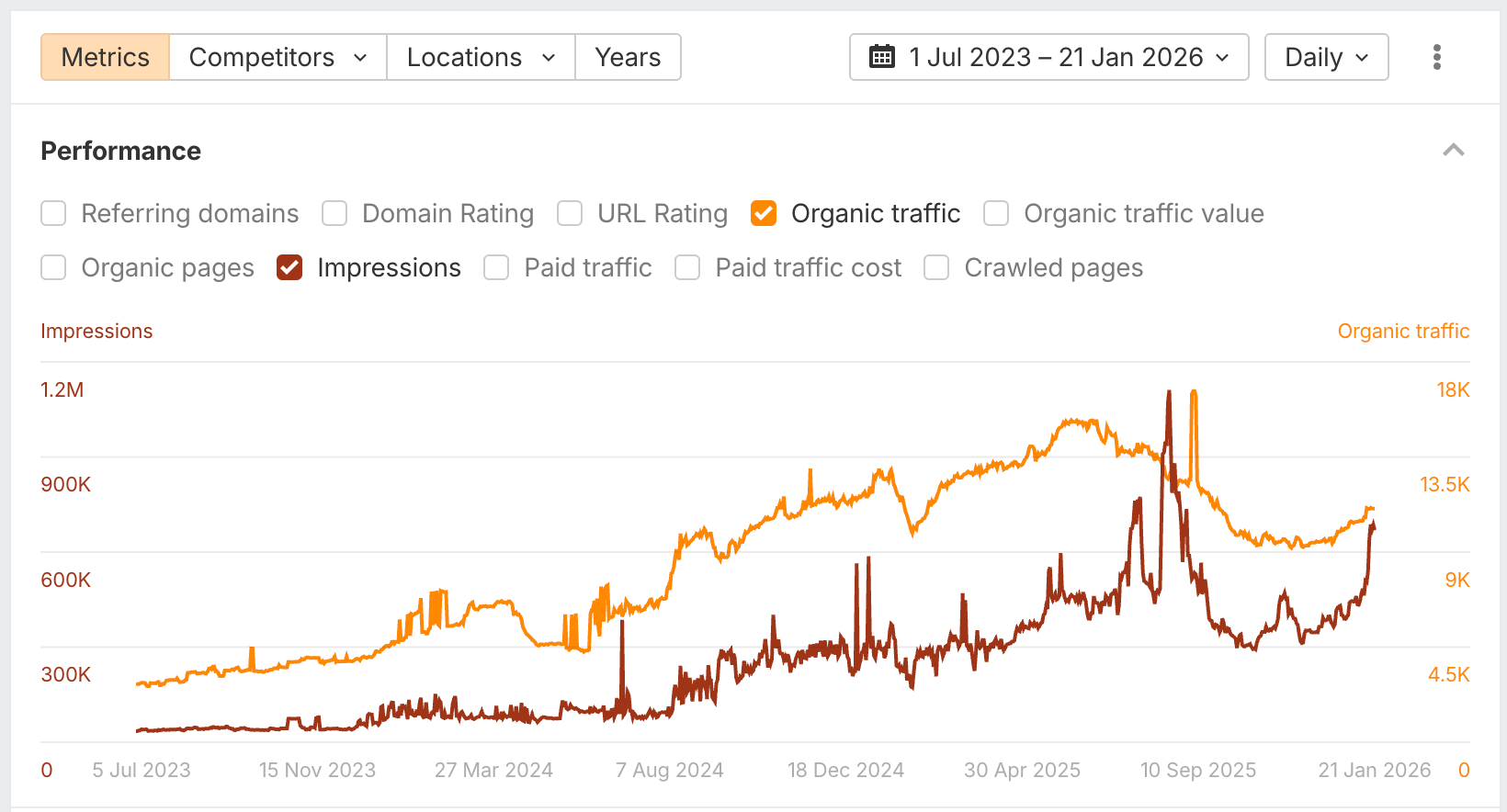
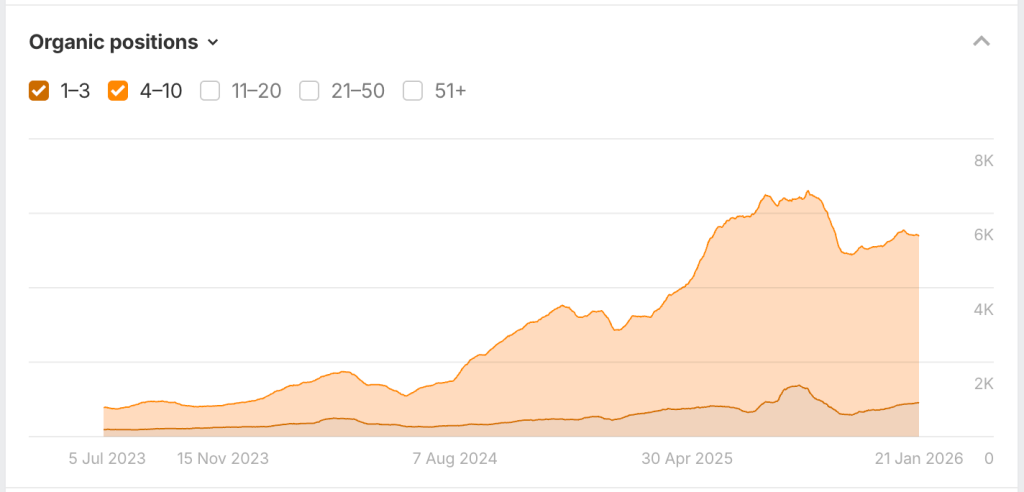
✅ Scaled top-10 keyword positions from ~770 to ~6,400 (+731%). The site went from ranking for a few hundred keywords on page one to dominating over 6,000.
✅ Grew top 1–3 positions from 190 to 1,204 (+534%), meaning the site wasn’t just getting onto page one but reaching the very top of search results.
✅ Non-branded organic traffic grew from 916 to 4,353/month (+375%), proving the content strategy attracted entirely new audiences, not just existing brand searchers.
✅ Commercial-intent traffic grew from 908 to 3,139/month (+245%), demonstrating that the content drove business-relevant queries with purchase potential, not just informational visits.
✅ WordPress-entity traffic grew from 214 to 2,637/month (12x), reflecting Google’s recognition of the site as a WordPress authority.
Link Building: The Statistics Asset
✅ Attracted 860+ referring domains to a single article, going from zero to one of the most-cited WordPress resources on the web in under two years.
✅ Earned backlinks from 59 domains with DR 81–100, including Shopify, Wix, HubSpot, PCMag, Entrepreneur, Gizmodo, and Neil Patel. All without any manual outreach.
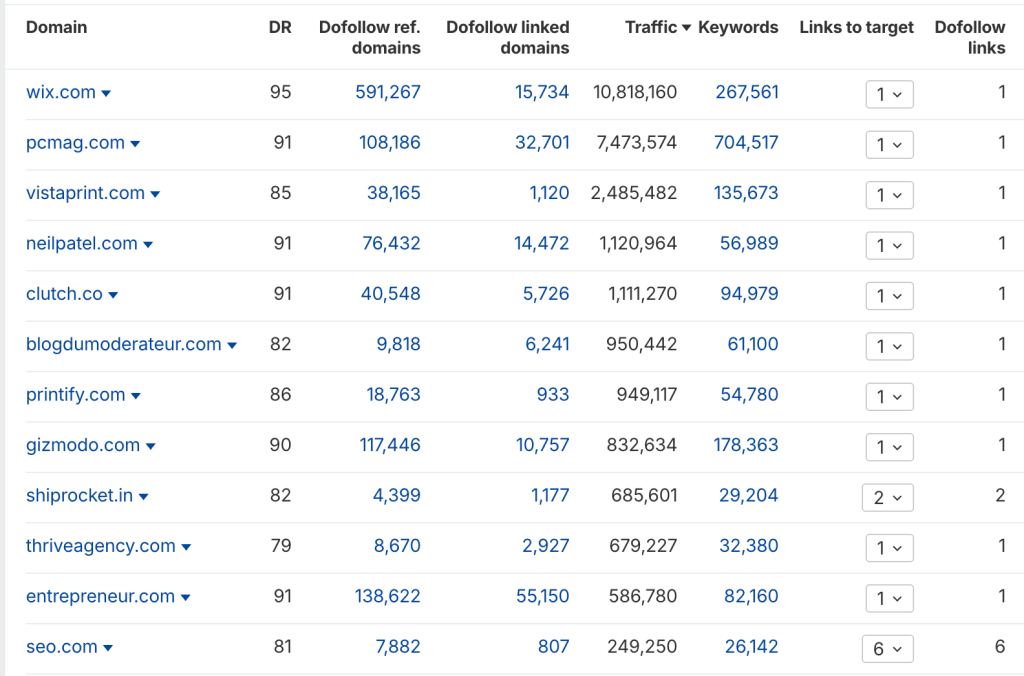
✅ 80% dofollow link rate (688 of 863 referring domains), directly strengthening WPZOOM’s domain authority and lifting the ranking potential of every page on the site.
Theme Detector Tool
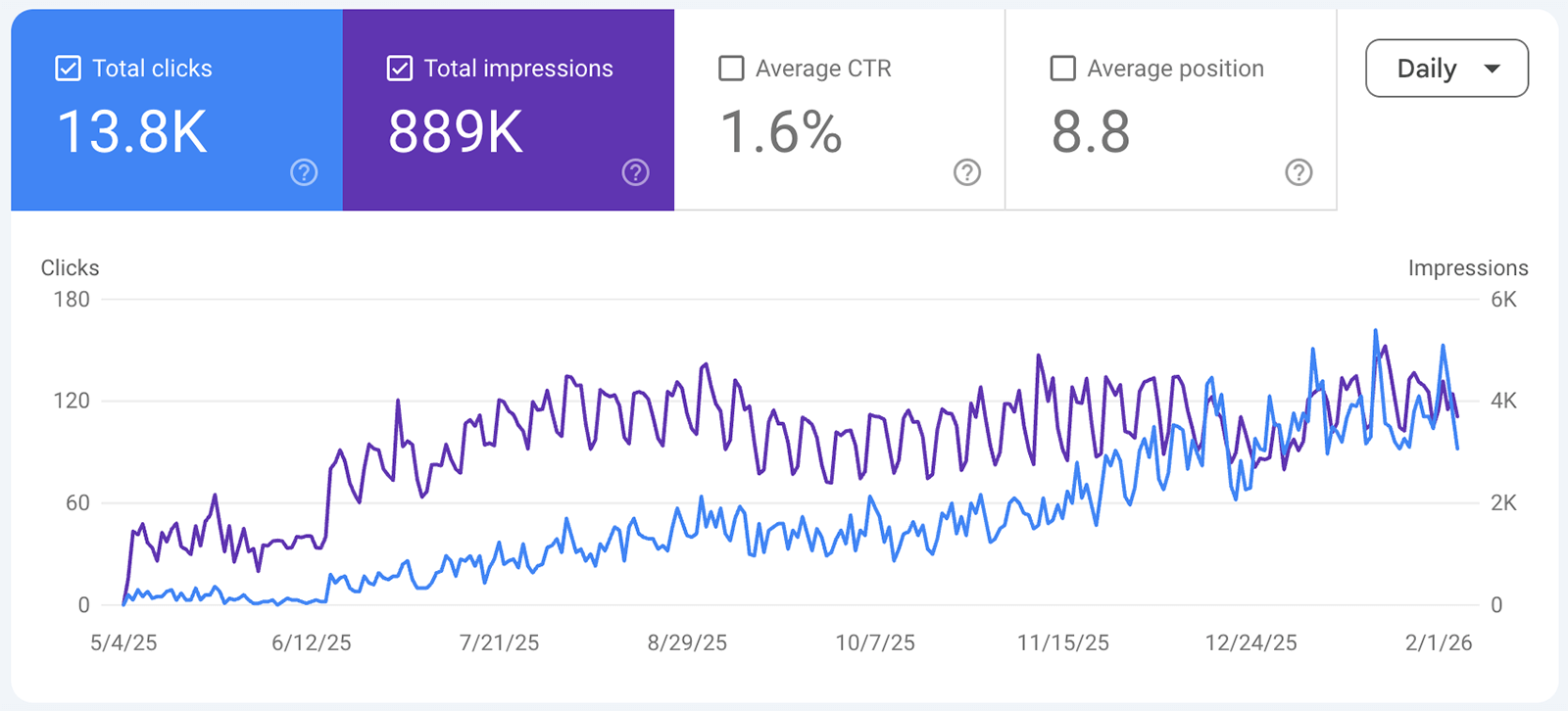
✅ Became the #1 page on the entire site within 8 months of launch, generating 3,453 clicks/month (January 2026) with an average position of 6.3.
✅ Attracted 91,000+ monthly impressions by February 2026, making it the single biggest visibility driver for the WPZOOM brand.
Inspiro Starter Sites Cluster
✅ 46 niche-specific landing pages indexed and ranking within months of launch, generating 15,000+ monthly impressions and growing steadily.
✅ Correlated with the Inspiro main page ranking improving from position 22–27 to 7.2. The topical authority from the cluster reinforced the parent page’s relevance.
✅ Created a complete search-to-conversion funnel by connecting blog articles targeting niche theme queries at the top of the funnel with product-level starter site pages at the bottom.
Top-Performing New Articles
Several newly created articles became significant traffic drivers in their own right:
| Article | Peak Monthly Clicks |
|---|---|
| WordPress Statistics | 1,353 |
| Best Recipe Blogs | 969 |
| How to Create a WordPress Theme | 948 |
| Disable Comments in WordPress | 823 |
| How to Start a WordPress Blog | 694 |
| How to Log In to WordPress | 653 |
| WordPress Default Theme | 603 |
| Embed Instagram Feed in WordPress | 598 |
These eight articles alone generated over 6,600 monthly clicks at their peak, more than half of what the entire site was producing before the content strategy was implemented.
Impact
In under two years, I transformed WPZOOM’s organic presence from a brand-dependent, structurally fragmented site into a content-driven growth engine. The blog went from literally zero organic traffic to becoming 71% of the site’s total clicks, with 162 well-targeted articles driving over 16,800 monthly clicks at peak.
The numbers tell the story from every angle: GSC shows a 108% increase in real clicks and a 251% increase in impressions. Ahrefs confirms a 434% increase in estimated organic traffic, a 731% increase in top-10 keyword positions (from ~770 to ~6,400), and a 375% increase in non-branded traffic. The site went from ranking in the top 3 for 190 keywords to over 1,200.
What makes this case especially noteworthy is the competitive context. WordPress is one of the most saturated content niches online, with thousands of companies fighting for the same keywords. Achieving a 108% increase in organic clicks and building multiple articles to 600–1,300 monthly clicks required not just volume, but smart keyword targeting, strong content quality, and solid technical execution.
The WordPress statistics article demonstrates the power of strategic link building. A single well-designed linkable asset attracted 860+ referring domains, including Shopify, Wix, HubSpot, and PCMag, strengthening the authority of the entire WPZOOM domain without any manual outreach.
The content update program was equally important. With 76 articles receiving post-publication optimization, the strategy was never “publish and forget” but an active, data-driven cycle of creation, measurement, and refinement.
The Theme Detector tool and the Inspiro Starter Sites cluster demonstrate another dimension of the strategy: product-led SEO. The Theme Detector, a genuinely useful free tool, became a traffic asset that now outperforms every blog article on the site. The 46-page Starter Sites cluster takes a different approach, building topical authority around the flagship product while creating niche-specific landing pages that serve as the final step in the search-to-conversion funnel. Both will continue compounding over time.
Ready to scale your organic growth?
Let’s chat and explore how we can unlock similar results for your brand.